Border: where I test running an operation with agents
- Period
- 2026
- Disciplines
- Applied AI, Operations, Product
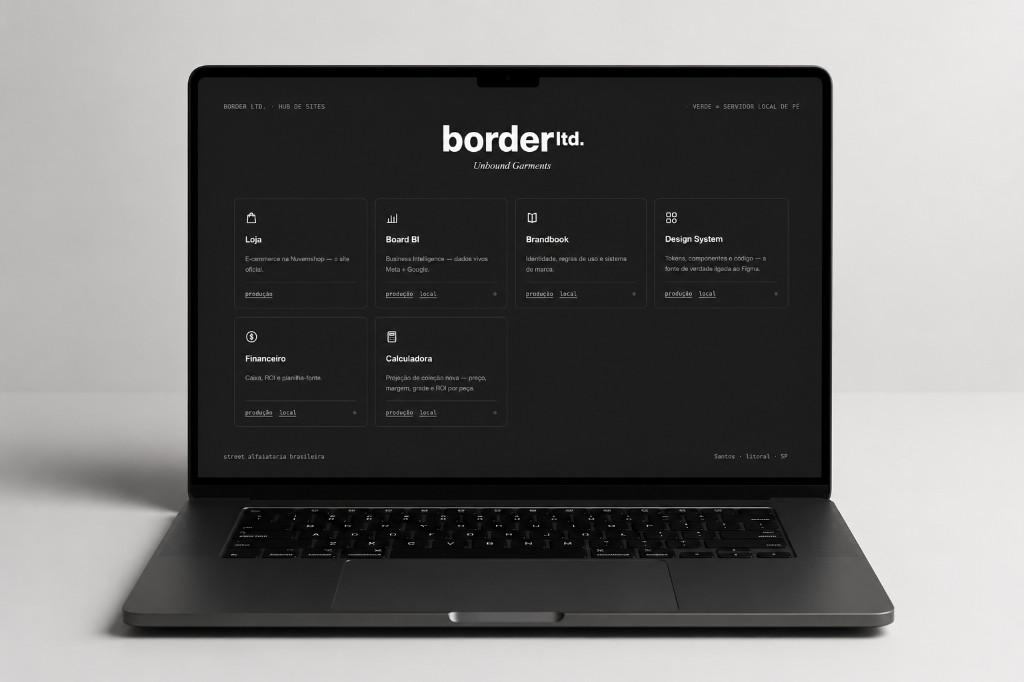
Border is where I test a question that is still mostly answered by guesswork: what changes in running a brand once execution is handled by AI agents?
Marketing, copywriting, data, and art direction are four roles. Instead of treating them as vacancies to fill, I designed the operation: roles, stages, handoffs, and the points where a person decides.
The real problem
Operations is where a brand stalls. Content that doesn't ship, calendars that slip, marketing decisions made in the dark because nobody looked at the numbers. None of that is an idea problem; it is a problem of method and execution.
What I built
Border Studio is a multi-agent AI system that runs the creative and marketing side of the brand. Each agent has a defined role: topic research, writing in my voice, visual piece creation, review. It's not a chatbot that answers questions. It's an operation with stages, handoffs, and human approval before anything goes live.
Under that sits an ecosystem of sites I use every week: a BI board pulling Meta and Google Analytics, a full brandbook, a documented design system, and a lookbook prompt generator. This isn't portfolio mockup. It's working software.
What's open now
I've opened public access to most of that ecosystem. One hub leads to everything else:
Or go direct:
BI Board
Marketing dashboard with live Meta and Google data. Content panels, paid traffic, competitors, editorial planning, and integrated AI tools. This is where I look at the numbers before deciding.
Brandbook
Border's visual identity manual: logo, typography, colors, voice, photography, applications, and usage rules. The brand reference that feeds everything else.
→ border-brandbook.netlify.app
Design System
Tokens, components, patterns, and documentation linked to Figma. The visual and code source of truth that the board, brandbook, and other sites consume.
Prompt generator
AI image lookbook tool: fixed casting, predefined scenes, output for the three engines I use (Midjourney, Flux, NanoBanana).
Why this matters for my work as a designer
Designing this ecosystem was designing product: roles, flows, decision points, where the human enters and where the machine continues. The difference is that the user, for now, is me. Testing it on yourself changes what you think you know about internal tools.
loading comments...