- Published by
- Helena Duppre
- Date
- Category
- ux
- Reading time
- 7 min
Designed for people who couldn't read: the design of Brazil's voting machine
keywords: electronic voting, universal design, accessibility, product design
A phone keypad, voting by number, a confirmation screen and a beep meant for the poll worker. Brazil's electronic voting machine turned thirty in 2026, and it's one of the most interesting product design cases in the country, because it was designed around the people most likely to be left out.
I know everyone's talking about who's going to win, but every election I catch myself looking at the voting machine as a piece of design. This year it turns thirty, and it felt like time to write about it.
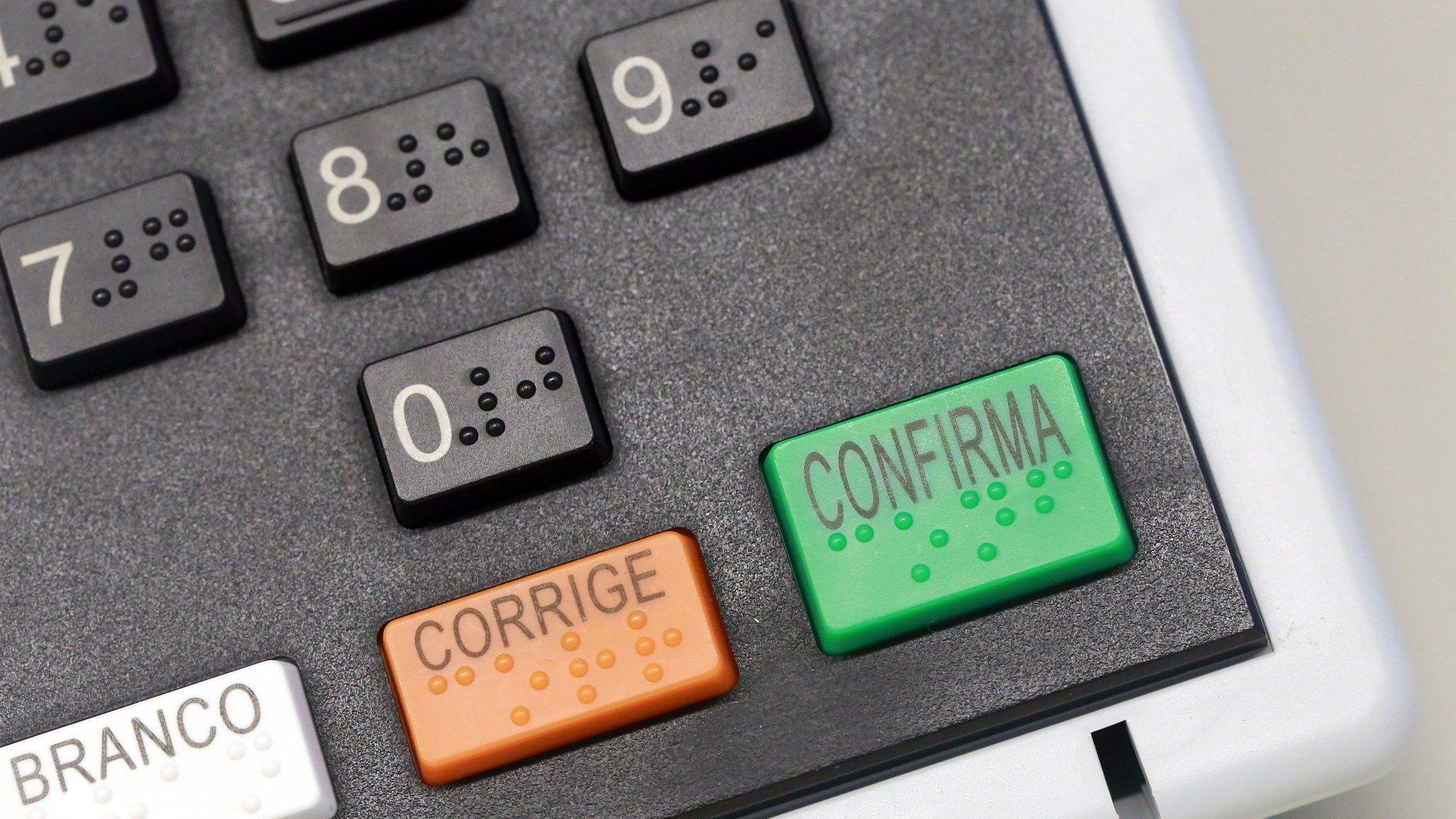
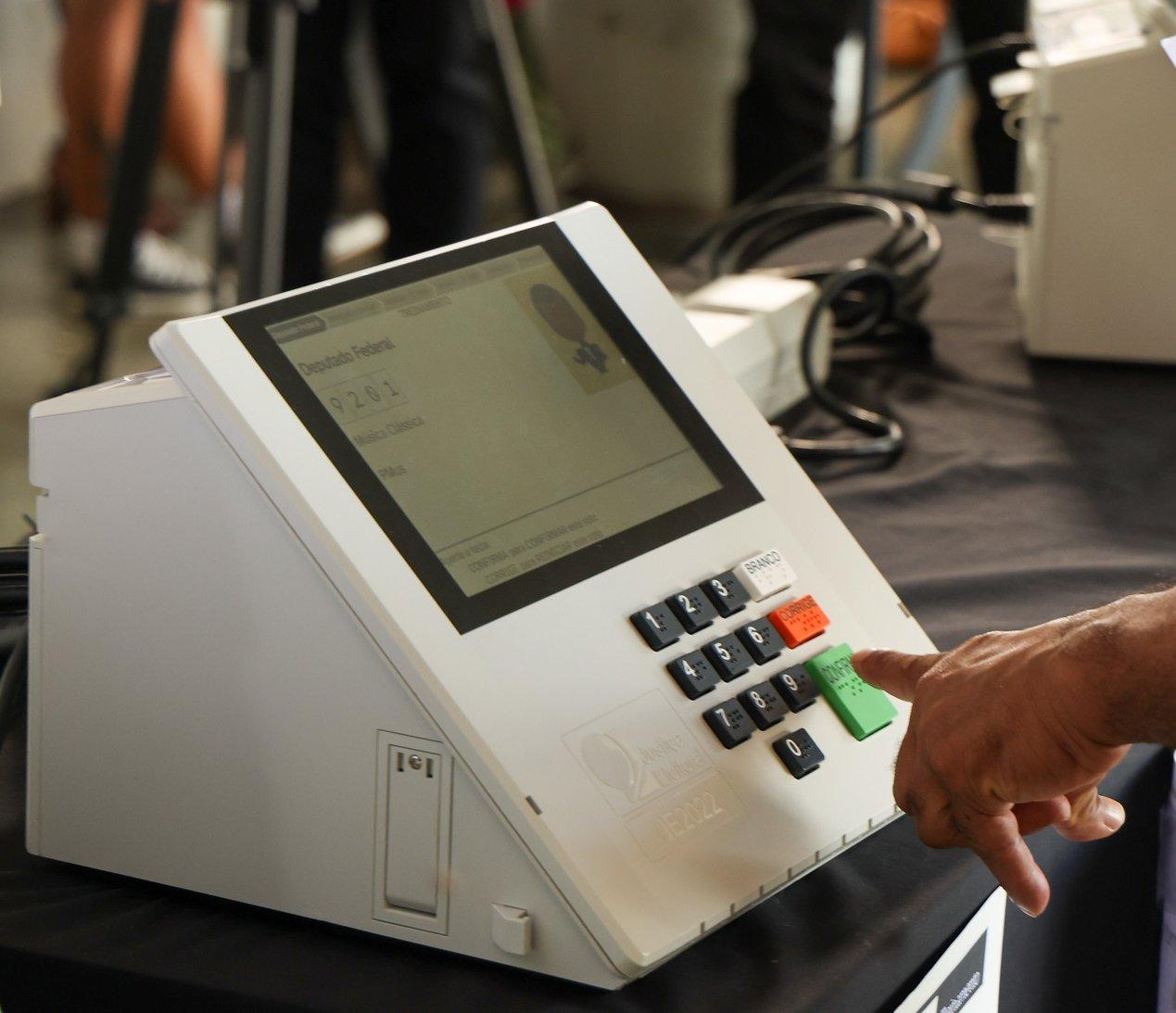
Picture the scene. You step into the booth, type two numbers, someone's photo appears on the screen, you press the green key and the machine answers with the pilili, a short electronic trill any Brazilian would recognise with their eyes shut. Nobody had to teach you. And the same interface serves people with a PhD, people who never went to school and people who can't see the screen.
All of that was designed on purpose, back in 1995, and it's why I think the urna eletrônica, as we call the machine, is one of the most interesting product design cases in Brazil. It has field testing before launch, a tight budget, stakeholder negotiation and an accessibility story that is still unfolding today.
A "simple and cheap" machine
In March 1995, Brazil's Superior Electoral Court (TSE) set up a Commission of Notables to propose changes to the electoral system, and one of its fronts was computerising the vote. Justice Carlos Velloso, who presided over the court, turned down the foreign machines offered to Brazil with a line I love: "let's build a homegrown machine, simple and cheap".
Between March and August 1995, the commission tested prototypes that some regional electoral courts (TREs) had already built, and each one left an idea that stuck. The one from Minas Gerais, made with IBM, proposed voting only with numbers on a phone keypad. The one from Mato Grosso printed a bulletin with the machine's results.
After that, the technical side went to a small group led by Paulo César Camarão, the TSE's IT secretary, with engineers from the National Institute for Space Research (INPE), the three branches of the Armed Forces and the telecom research centre CPqD.
There was testing with real people before the debut. In May 1995, three districts in the interior of São Paulo state voted on adapted computers in the referendums that turned them into municipalities, with just over four thousand registered voters. The screen already showed yes, no and blank, and then asked you to confirm or correct.
In July 1996 came a large mock election in Curitiba, and the Paraná TRE's account is every product team's dream before a launch: "everything that could go wrong actually did". There was time to fix it before October.
On the 3rd of that month, around 32 million people voted electronically in 57 cities, a third of the electorate. Four years later, in 2000, it was the whole country, with more than 350,000 machines.
The user was someone who couldn't read
Now the part that interests me most. In 1996, 14.7% of Brazilians aged 15 or over couldn't read, according to the national household survey (PNAD), in the series compiled by Ipea. In the Northeast it was 28.7%, almost one in three adults. A machine that asked you to look up a candidate's name would have left those people out.
The project also aimed at low cost and robustness, and the phone keypad has a recorded reason. Giuseppe Janino, a former IT secretary at the TSE, explained that it was chosen "so that illiterate and visually impaired voters could interact". The keys have had braille since 1996, and the 5 has a raised dot for anyone who doesn't read braille.
This is the decision I admire most in the whole project. They designed for the people most likely to be left out, the illiterate voter and the blind voter, and the result worked for everyone. Fluent readers don't even notice the interface was built with someone else in mind. That's what universal design is: you start from the exception.
Economists have measured this. Thomas Fujiwara, in Econometrica in 2015, showed that the machine cut the votes lost to errors on the paper ballot and brought a lot of people with little schooling into the election. His results suggest this drove up public spending on health, with more prenatal care and fewer low-birth-weight babies among less-educated mothers.
Jairo Nicolau found something in the same direction looking at the 1998 election: with the machine, blank votes fell for all four offices. Spoiled votes fell in the race for deputy and rose for governor and president, which may have to do with protest voting.
Both studies compare the machine with the paper ballot, so the interface doesn't get all the credit. Even so, it gives me goosebumps to think how much that switch changed who gets counted in an election.
Cutting until it fit any hand
The other side of that decision was cutting a lot. The requirements Camarão left on record read like a product brief: voting by number, its own battery, robustness, a chance to correct before the vote is final, the vote's details on screen, easy handling and a cost within budget. Notice what was left out: a list of names to search and a menu to navigate.
Voting by number was a hard sell. Camarão said it was one of the most complicated changes, because candidates "have their brand in their names". According to the Paraná TRE, it took an intense effort to win over Congress. Anyone who has tried to take a field a director wanted out of a form knows how big that conversation is.
The flow was also designed for mistakes. Since the 1995 tests, the machine has offered blank, correct and confirm, and the vote only counts after confirm. Since 1998, that screen shows the photo of every candidate. It's the same review screen we design before any important submission.
The pilili came from a very practical need: the poll worker had to know the voter was done. Antônio Esio Salgado, an INPE engineer in the technical group, recalls that the team listened to several sounds from the manufacturer until the pilili came up and someone said "that's the one". The most famous audio feedback in the country was made for the person outside the booth.
That design has held up well. The machine has gone through 14 models and gained biometrics and encryption, and up to 2024 the voter's interaction stayed practically unchanged, as a paper presented at IHC 2025, Brazil's human-computer interaction symposium, records. Almost thirty years with the same interaction is rare in any digital product.
Accessibility grew little by little
What really changed over these thirty years was accessibility. In 2000 the machine got a headphone jack, with recorded audio that said the office and the number, without the candidate's name. The speech synthesis that reads the name only arrived in 2020, and an on-screen video interpreter for Libras, Brazilian Sign Language, in 2022.

In 2024, the machine adopted the Letícia voice, which belongs to the singer Sara Bentes, who was born visually impaired. The engine is free software created by blind programmers, and the idea came from a suggestion by the National Organization of the Blind of Brazil. Blind people helped design what was going to serve blind people.
It's the kind of project I wish I saw more often. And it serves more and more people: in 2026, the voter roll has almost 2 million people with a registered disability, 42% more than in 2022.
This year, right on the thirtieth anniversary, the screen changed. The machine now uses Atkinson Hyperlegible, a typeface from the Braille Institute designed to make each character more distinct. The voting screens were redesigned and gained a fixed bar at the top, which shows which offices have already been voted on and which are still to go.
The Libras interpreters now also signal blank votes, spoiled votes and party votes. Some of the ideas came from a competition with students at the University of São Paulo (USP). And Silvio Trindade, who is visually impaired and needed a magnifying glass to read the screen in recent elections, tested the new interface and thinks he won't even need it.
Where the machine still trips up
Stopping at praise would be dishonest. In 2025, Nogueira and Monteiro, from the Federal University of Ceará (UFC), evaluated the communicability of the current machine and the TSE's simulator with nine participants. They found people struggled to understand the blank vote and the spoiled vote, and they suggest support messages that explain better what each action does.
The paper itself points out that a 1999 study had already flagged a problem with the blank vote. And there's a gap that bothers me as a researcher: I couldn't find any usability study published by the TSE, with method and sample.
What shows up in the official records are operational mock elections and, in 2020, a test of the speech synthesis with two voters with disabilities. There may be more that isn't public. If you know of anything, tell me!
What I take from it
If I had to pull a list out of this for my next project, it would be short. Start with the person most likely to be left out and see how many people come along. Cut until the interaction fits a gesture the user already knows. Show what's going to happen before recording it, and let people correct it. Remember that feedback also serves whoever is on the other side of the screen.
Next time you hear the pilili, pay attention: there are thirty years of design decisions inside that sound. A kiss and see you next time!
For anyone who wants the source:
All sources are in Portuguese except Fujiwara and Nicolau. The quotes in the text are my translations.
- Brasil (1995). Lei nº 9.100, de 29 de setembro de 1995. (link). The date of the 1996 election and the authorisation for electronic voting.
- TSE (2014). Conheça a história da urna eletrônica brasileira, que completa 18 anos. TSE website (link). The technical group, Camarão's account of voting by number and Janino's line about the phone keypad.
- TSE (2016). Série Urna Eletrônica: conheça a história da informatização do voto no Brasil. TSE website (link). Janino's line and the expansion to the whole country.
- TSE (2021). Urna eletrônica 25 anos. TSE website (link). Carlos Velloso's line about the homegrown machine (in the original, urna tupiniquim).
- TSE (2022). 90 anos da Justiça Eleitoral: urna eletrônica revolucionou eleições. TSE website (link). The Electronic Vote Collector and its origins at INPE and CTA.
- TSE (2023). Urna eletrônica de 2000 permitiu a primeira eleição 100% informatizada. TSE website (link). The audio from 2000.
- TSE (2025). Conheça a evolução da urna eletrônica: de 1996 a 2024. TSE website (link). The 14 models, braille since 1996 and every candidate's photo from 1998 on.
- TSE (2011). Justiça Eleitoral brasileira assegura direitos da pessoa com deficiência. TSE website (link). The braille and the raised dot on the 5 key.
- TSE (2020). Eleitor com deficiência visual poderá ouvir nome do candidato na urna. TSE website (link). The speech synthesis and the test with two voters.
- TSE (2022). Federação dos Surdos agradece TSE pela implantação de Libras na urna eletrônica. TSE website (link). The on-screen Libras interpreter.
- TSE (2024). Eleições 2024: urnas contarão com novo recurso de acessibilidade para pessoas com deficiência visual. TSE website (link). The Letícia voice, Sara Bentes, RHVoice and the suggestion from ONCB.
- TSE (2026). Faltam 28 dias: eleitorado com deficiência cresce e Justiça Eleitoral reforça acessibilidade e inclusão. TSE website (link). The number of voters with disabilities in 2026.
- TSE (2026). Urna eletrônica ganha nova interface para tornar votação mais acessível e intuitiva. TSE website (link). The Atkinson Hyperlegible typeface, the progress bar, Libras for blank, spoiled and party votes, the USP competition and Silvio Trindade's account.
- TRE-SP (2026). 30 anos da urna eletrônica: Comissão de Notáveis estruturou as bases para a máquina de votar em 1995. (link). The commission and the TREs' prototypes.
- TRE-SP (2025). 30 anos da urna eletrônica: o edital mais importante da história da Justiça Eleitoral. (link). The design requirements Camarão put on record.
- TRE-SP (2026). 30 anos da urna eletrônica: teste em São Paulo abriu caminho para o voto eletrônico no Brasil. (link). The 1995 referendums with the prototype.
- TRE-SP (2026). Som da urna eletrônica completa 30 anos: conheça a história do pililili. (link). The origin of the pilili and Antônio Esio Salgado's account.
- TRE-PR. A urna eletrônica. Portal da Memória (link). The Curitiba mock election, the numbers from the first election and the effort to win over Congress (the election date is wrong there; the law says 3 October).
- Ipea (2008). PNAD 2007: primeiras análises — educação. Comunicado da Presidência nº 12 (PDF). The 1996 illiteracy rate, for Brazil and the Northeast.
- Fujiwara, T. (2015). Voting Technology, Political Responsiveness, and Infant Health: Evidence from Brazil. Econometrica, 83, 423–464 (abstract). The machine, the lost votes and the effect on health (the article is paywalled; I worked from the abstract).
- Nicolau, J. (2015). Impact of Electronic Voting Machines on Blank Votes and Null Votes in Brazilian Elections in 1998. Brazilian Political Science Review, 9(3) (PDF). Blank and spoiled votes in 1998.
- Nogueira, E. L. & Monteiro, I. T. (2025). Uma Avaliação da Comunicabilidade da Urna Eletrônica Brasileira. Anais do XXIV IHC (link). The difficulty with blank and spoiled votes, and the interaction practically unchanged since 1996.
Read next
Synthetic users get the average right and lose the difference between people
A client wrote that he only used the app to check his balance, because it didn't feel safe enough to move money. That one sentence changed the priority of an entire project, and the app's store rating went from 3.5 to 4.7. A conversation about what synthetic users give you, what they have no way of giving you, and the test I use to decide where they belong.
9 min read
Too pretty to test: the aesthetic-usability effect
A beautiful interface makes users like your product more. It also makes them give you a high ease-of-use score on a test where they just struggled through the task right in front of you. The aesthetic-usability effect is the most polite trap in user research.
6 min read
Why you love one app and hate another (even when they do the same thing)
I'm paying off the promise from my last post: emotional design. Don Norman's three levels explain why we decide we like a product long before we understand it.
4 min read
loading comments...