- Published by
- Helena Duppre
- Date
- Category
- reflections
- Reading time
- 3 min
What is design? I came back to rewrite my own answer
keywords: design, reflection
I came back to rewrite my 2019 text. What changed? Empathy got more urgent in the age of AI, and data more important than ever.
This text already had a first version, back in 2019. I reread it recently and realized the girl who wrote it got almost everything right, except the ending. So I pulled up a chair to fix the ending.
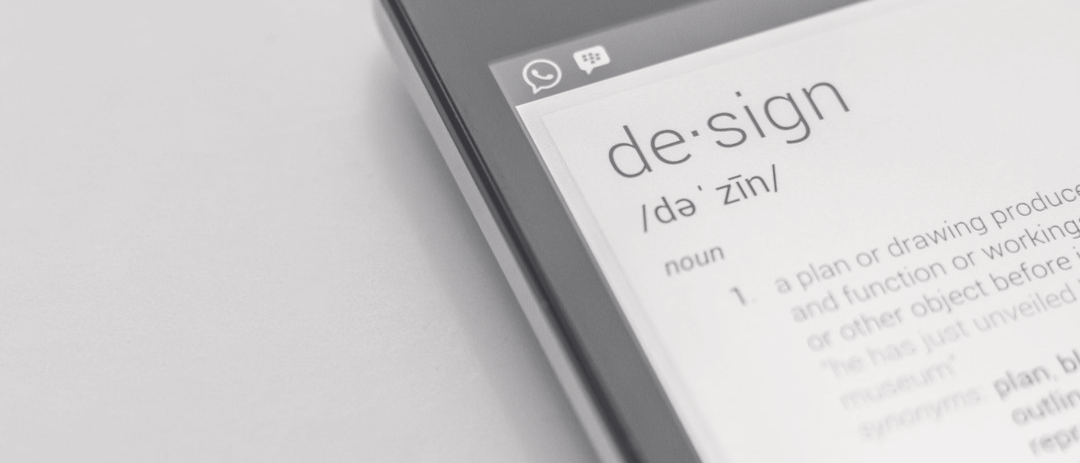
Back then, I opened by telling a story about a classroom argument. We were fighting over whether design is a form of art, and me, stubborn Taurus that I am, dug in that it was. It was Rafael Cardoso, in "Design para Um Mundo Complexo", who made me swallow my stubbornness: design and art have different purposes. One sets out to solve a problem, the other doesn't need to solve anything. That was my first definition, and for years it was enough.
Today it feels far too short.
If you ask me now, over a beer, what design is, I answer something else: design is planning and strategy. It's thinking first, deciding with judgment, giving shape to an intent. Except that half on its own turns into a pretty portfolio slide, an elegant plan for nobody. The other half, the one that holds it all up, is making products and services that people actually use, see themselves in, and that solve their pains along the way. And look, hidden inside that "see themselves in" there's a really juicy conversation about emotional design, but I'll save that one for the next post.
Empathy didn't leave the stage. It got more urgent.
The 2019 text ended with a line I'm still fond of, and that I wouldn't sign today: that if everyone were a little bit designer, the world would be better. Sweet, naive. What I still defend is the core of it: when we're willing to step into someone else's place, we gain a diversity of viewpoints on the same situation that changes what we build. That hasn't aged. Fact. If anything changed, it's that it got rarer.
And here comes the turn the 2019 Helena had no way of seeing. Everyone bet AI would shrink the need for empathy. For me the opposite happened. To ask a machine well, I need to know very clearly what people need, and that doesn't come from inside my computer. It comes from conversation. It comes from looking people in the eye.
But that's exactly the part that's being lost. I see more and more people using AI to test perception of use, to predict what a human will feel in front of a product. I'll admit I don't know how that really works. There's nuance the machine doesn't hand back to me: a flicker of doubt on someone's face, a second too long of hesitation, a discomfort the person never even puts into words. That detail is where good design lives. And that detail is exactly what only shows up in a real conversation.
The part nobody puts on a résumé
There's a truth the 2019 Helena had no road behind her to know, and I need to put it down here because it's the one that shaped me most.
Plenty of times you show up with data, with technique, with years of mastery in your field. And even so the "I think" wins. The owner's taste wins. The PM who decided before asking wins. Then you redo everything later, when the problem you'd already predicted shows up, and you lose time you don't get back.
It took me a while to understand this isn't a flaw in my work. It's part of it. Real design demands a skill no school teaches properly: being political, resilient, and analytical enough to cross the barrier between peers. The work doesn't end at the best answer. It ends when you manage to move the whole table from "I think" and "I like it this way" to "I trust this answer because of the data you showed me". When that crossing happens, design happens with it. When it doesn't, it stays stuck in your Figma.
Yeah. Nobody warns you that half the profession is that.
Looking at the two texts side by side, the 2019 one and this one, I'm not ashamed of the first. It was honest for the size I was back then. It just grew with me. Empathy is still at the center, now with muscle. Strategy came in. And politics, which I didn't even know existed, became a work tool.
If I had to squeeze it all into one line for you to take home, it'd be this: design is method and organized chaos with a clear purpose.
Seven years from now I'll come back to rewrite it again. Just giving you a heads up.
A kiss, and see you next time!
Read next
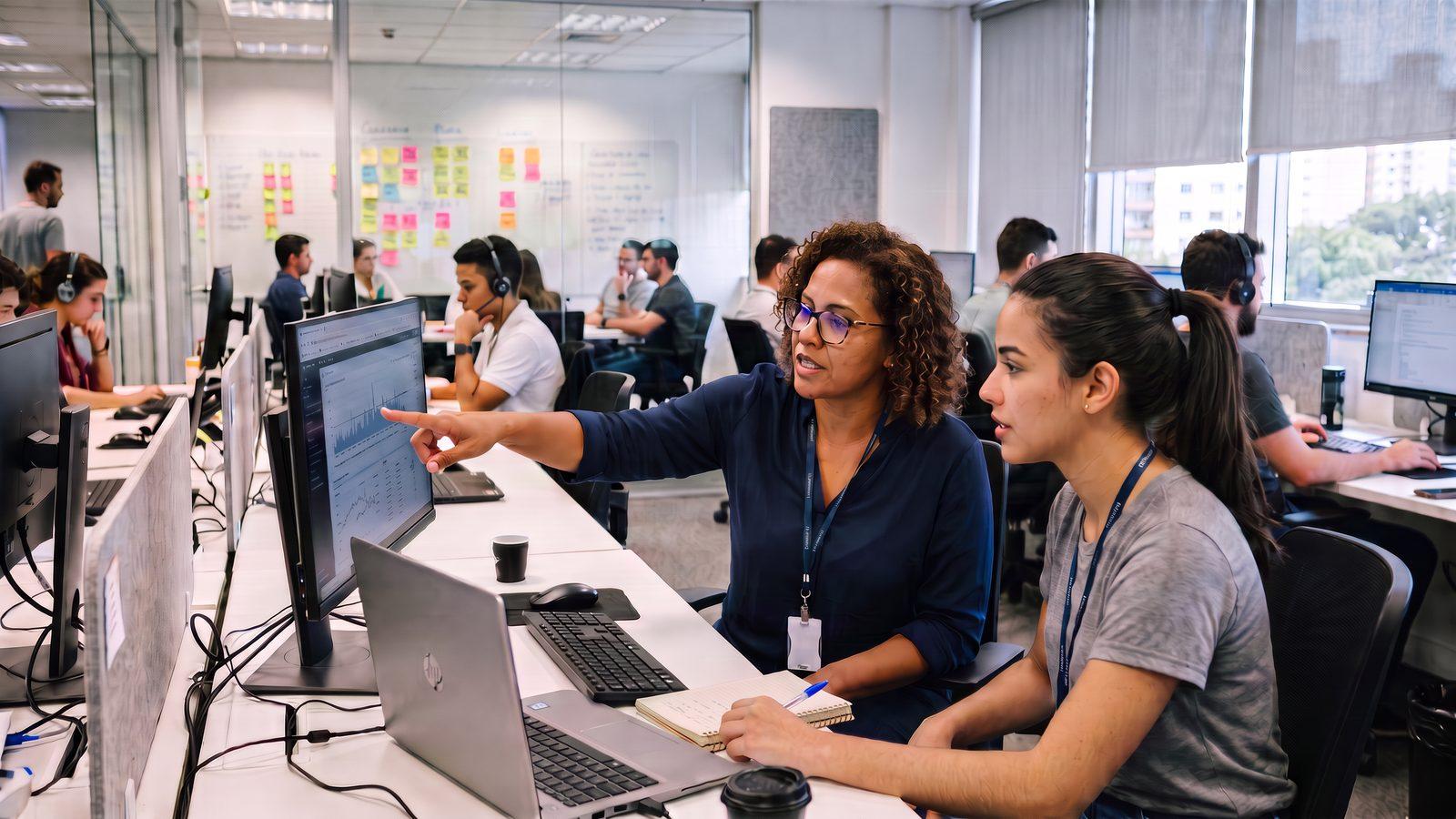
Leading people in the age of agents: what AI speeds up and what it hides
If one person with AI delivers what two used to deliver, has half the team become a cost? In the very experiment that arms that math, top-decile solutions were almost three times more likely to come from a pair with AI than from someone working alone without it. The math buys the average and sells the top — and it still leaves out the step where juniors used to learn.
12 min read
From /imagine to a team of agents
From Midjourney to Claude: my journey with AI applied to product design, from asking a Discord bot for images to directing teams of agents today.
5 min read
Your site's first reader isn't a person
In a Pew study of 900 people, when Google showed an AI summary, clicks on a search result fell from 15% to 8%. Clicking a link inside the summary happened on 1% of visits. Whoever reads your site first is now a machine, it doesn't run your JavaScript, and what it understands is a design decision.
9 min read
loading comments...