- Published by
- Helena Duppre
- Date
- Category
- ux
- Reading time
- 6 min
Eight thousand keystrokes an hour
How the pace of work got into Brazil's ergonomics standard, and why the chair was the least of it
keywords: ergonomics, NR-17, human factors, design fundamentals
In 1986, data entry workers in São Paulo were falling ill with tenosynovitis, and labor inspectors went to see what was behind it: production bonuses, no breaks, overtime. The fight that followed produced the NR-17 Brazil has today. A post about the map of ergonomics and about a rule that bans using the on-screen timer to rush someone.
In the post about pilot error I promised to open up the whole map of ergonomics. A map in encyclopedia order would put everyone to sleep, me included, so I decided to tell it through its Brazilian history, which has keyboards, a standard rewritten in ten days and a rule about timers on screens.
São Paulo, 1986. Data entry workers are falling ill with tenosynovitis, one of the repetitive strain injuries that Brazil calls LER, in such numbers that the health directors of their union go to the regional labor office for help. These were people who spent the workday feeding data into computers, at a time when automation was moving into companies.
The disease had already shown up earlier in the decade. In a 1997 article, Herval Pina Ribeiro says the first cases in Brazil that looked like a work-related disease appeared among bank employees doing data entry at the data processing center of a state-owned bank, and that they spread as automation advanced through the financial system.
In São Paulo, a team of doctors and engineers from the labor office, along with union representatives, went out inspecting companies using ergonomic work analysis. Every assessment turned up the same factors: production bonuses, no breaks, overtime and double shifts, among others. This comes from the application manual for NR-17, published by Brazil's Ministry of Labor in 2002.
If I ask you to picture ergonomics, I bet you'll see a chair. The inspectors pointed at how people were paid and how the day was organized. A proper seat had been in Brazil's labor code, the CLT, since 1977, and the rest was still untouched. To me, the chair is the smallest part of ergonomics, and today's NR-17 exists because the people typing got sick.
A word with "law" already inside it
I promised the origin of the word, so here it is. Ergonomics joins the Greek terms ergon (work) and nomos (law), and the story usually starts in 1857, with the Pole Wojciech Jastrzębowski, who proposed a scientific discipline about work, which he called ergonomics or work science, in a journal called Nature and Industry.
The term fell into oblivion. In 1949, K. F. H. Murrell reinvented the word in England, and that same year physiologists and psychologists met in London to found the Ergonomics Research Society. Here's a detail I like: when the Brazilian manual explains what ergonomics is, the first definition it uses comes from that society.
Ten days to rewrite the standard
The inspectors' problem in 1986 was that, on this point, they had nothing to enforce. NR-17 (NR stands for Regulatory Standard) had existed since 1978, but apart from lighting, noise and temperature, no standard let them require a company to change how it organized production. The manual says that, until then, work organization was considered "untouchable".
Between 1988 and 1989, the association of data processing professionals met with the government to draft a standard that would limit work pace, ban productivity bonuses and set comfort criteria, furniture included. The ministry was reviewing all the NRs at the time. At a seminar in December 1989, the decision was to go broader, because these injuries were appearing in other professions.
The São Paulo team got ten days to rewrite all of NR-17. With no systematic studies of other sectors, it wrote broad items to cover as many situations as possible, and detailed below them only what was ready, data entry. Anyone who has written design system guidelines on a short deadline will recognize the move.
The standard still took a while to take effect. Signed in March 1990, it reached its final text in November, after the federations of São Paulo's industry and of Brazil's banks argued that work organization concerned companies alone (this is the manual's version, from the inspectors' side). Pace looked like a management matter and became a health matter.
What fit into eight thousand keystrokes
The manual calls including work organization among the conditions the standard reaches its "most significant advance". For data entry, the text got very concrete, always subject to collective agreements: companies couldn't pay or reward people by individual keystroke count, and could demand at most 8,000 actual keystrokes per hour.
That's more than two keystrokes a second, and it was the ceiling! Along with it came 5 hours of data entry a day and 10 minutes of break for every 50 worked. The pay rule is the smartest one. According to the manual, pay per keystroke looks like a free pace and leads people into a "self-acceleration" that runs over their own fatigue.
The current wording, rewritten in 2021, no longer mentions keystrokes and has lost the numeric limits for data entry. What's left is a more general duty: to consider production standards, time demands, pace and cognitive aspects, and to take health into account in any assessment that affects pay. Breaks remain a possible measure, with no increase in pace alongside them.
The map fits in a call center
Now for the map I owe you. The European federation of ergonomics societies splits the discipline into three areas, and the best way I found to show all three was NR-17's annex on call center and telemarketing work, from 2007. It's one single job, in ten pages (the standard doesn't use this division, the sorting is mine).
Physical ergonomics looks at the body, posture, repetition and the workstation. In the annex, it shows up in furniture that's easy to adjust, in the headset that lets you switch ears through the day and in the right to change posture. It's the part everyone pictures, the chair part, and it takes up only a piece of the document.
Cognitive ergonomics looks at perception, memory, decision making, mental workload and human-computer interaction. In the annex, that's item 6.15: systems must be built and updated to reduce extra tasks like constantly relying on short-term memory, keeping makeshift notes and writing the same thing on paper and on screen. To me, that's a UX requirement.
Organizational ergonomics looks at working hours, shifts, policies and job design. Here you find the 6-hour day with breaks included, the two 10-minute breaks away from the workstation, going to the bathroom at any time with no effect on evaluations or pay, and the ban on requiring operators to follow the script to the letter.
The same annex bans requiring anyone to wear costumes as punishment, promotion or advertising, and bans publicly exposing performance reviews. Reading that in a Ministry of Labor document made my chest tighten, because I suspect nobody writes that ban without having seen the scene (the standard doesn't tell stories, the suspicion is mine).
And I won't sell NR-17 as a happy ending. In a 2024 article, Fundacentro, Brazil's occupational safety research institute, records the view of its president, Pedro Tourinho: these injuries are still a very significant problem at work. A standard changes what can be demanded, and the rest depends on who inspects, who manages and who designs the work.
The timer rule
The item that got to me most is 6.9 in the annex. It says that messages on monitors, light, color and sound signals, and displays of call time or of the customer queue can't be used to speed up work. Where they exist, they must be available for operators to consult, at their discretion.
Read that again with a designer's eye. There's color, sound and a counter, and that's an interface spec inside an occupational health standard. What it blocks is the purpose: a timer that turns red to rush the person answering calls, in my reading (a designer's, not a legal opinion), runs straight into this item.
"At their discretion" can be read two ways, as choosing when to look or as the right to see your own data, and I didn't find an official interpretation. In both readings, the person can consult that data.
There's one more I like, 4.4: any new method or technological device that changes how people work calls for an ergonomic assessment first, with time for training and adaptation. In product language, the tool only changes after someone has looked at who's going to use it.
These rules apply to the work the annex covers, and I'm not saying they reach sales leaderboards or delivery apps. The question behind them is what travels well: when a screen rushes someone, who decided that, and whose body pays for it?
We designers learned to think of the user as someone who can leave. With a work tool, the person stays there all day, with targets, a boss and bills to pay, and the screen we design becomes part of how their work is organized.
If you build call center dashboards or internal systems, read section 6 of the annex, which is on gov.br (in Portuguese). It really helps you see your own screen differently.
When you design a timer for a screen, remember that someone already had to write a rule about it. A kiss and see you next time!
For anyone who wants the source:
The quotes from Brazilian documents are my translation.
- Ministério do Trabalho e Emprego, Secretaria de Inspeção do Trabalho (2002). Manual de Aplicação da Norma Regulamentadora nº 17. 2nd ed., in Portuguese (link). The history of the standard, from 1986 to the November 1990 ordinance, told from the inspectors' side; the factors found in companies; work organization as "untouchable"; the 1990 text with the limits on keystrokes, hours and breaks; "self-acceleration"; the Ergonomics Research Society definition.
- Ministério do Trabalho e Emprego. NR 17, Ergonomia, current wording, in Portuguese (link). The 1978 and 1990 ordinances, the 2021 rewrite and current items 17.4.1, 17.4.3 and 17.4.4, on work organization, breaks and performance assessment.
- Ministério do Trabalho e Emprego. Anexo II da NR 17, Trabalho em Teleatendimento/Telemarketing, current wording, in Portuguese (link). Approved by Ordinance SIT 09 of 2007. In the current numbering, items 3.1 (furniture), 4.1 (headset), 4.4 (new technology), 6.3 and 6.4 (hours and breaks), 6.7 (leaving the workstation), 6.8 (posture), 6.9 (monitoring), 6.11 (script), 6.13 (harassment, costumes and exposed reviews) and 6.15 (computer systems).
- Ribeiro, H. P. (1997). Lesões por Esforços Repetitivos (LER): uma doença emblemática. Cadernos de Saúde Pública, 13(suppl. 2), in Portuguese (link). The first cases among bank employees doing data entry and the link to automation.
- Fundacentro (2024). Trabalhadores com LER/Dort podem sofrer assédio moral e transtornos mentais, in Portuguese (link). The view of Pedro Tourinho, president of Fundacentro, as the article summarizes it (the article's paraphrase, not his quoted words).
- Federation of European Ergonomics Societies. What is ergonomics? (link). The Greek origin of the word and the three areas (physical, cognitive and organizational) with the topics of each.
- Technical University of Munich, Chair of Ergonomics. History of the Chair (link). Jastrzębowski in 1857, the term falling into oblivion and Murrell reinventing it in 1949.
- Jastrzębowski, W. (1857). An Outline of Ergonomics, or the Science of Work. English edition by the Central Institute for Labour Protection, 2000 (record). I haven't read the original or the translation; only the title comes from this record.
- Waterson, P., & Sell, R. (2006). Recurrent themes and developments in the history of the Ergonomics Society. Ergonomics, 49(8), 743–799 (link, copy hosted by the IEA). Murrell and the formation of the society in 1949.
- Brazil. Consolidação das Leis do Trabalho, art. 199, as worded by Law 6,514 of 1977, in Portuguese (link). Seats that ensure correct posture.
- Chartered Institute of Ergonomics and Human Factors. Our story (link). The founding of the Ergonomics Research Society in London in 1949.
Enjoyed this piece?
Read next
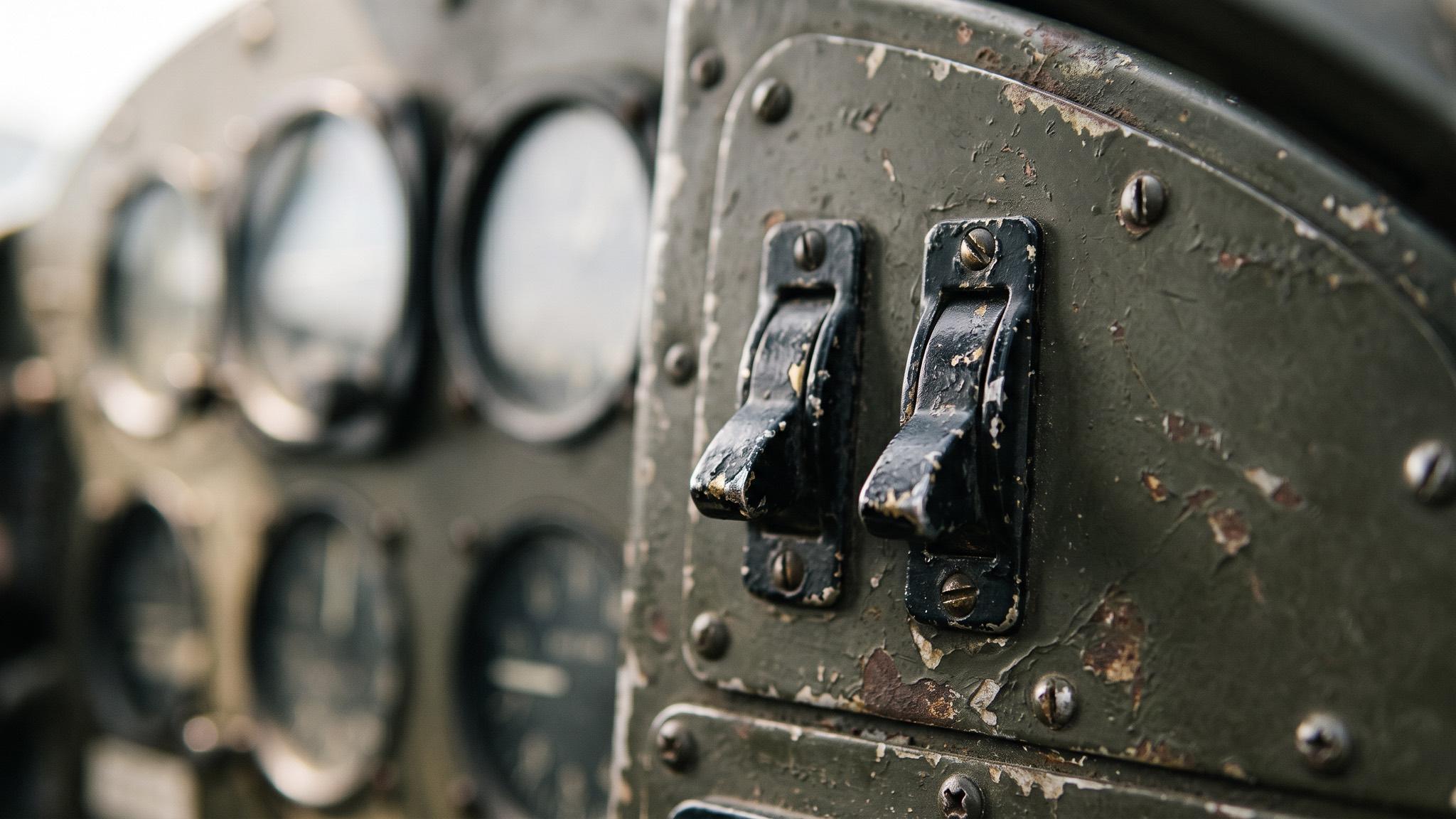
Pilot error or panel error?
In 1943, American pilots kept raising the landing gear when they meant to raise the flaps, and they took the blame. A psychologist looked at the panel and found two nearly identical controls, side by side. A post about ergonomics and about what we lose when we call everything human error.
6 min read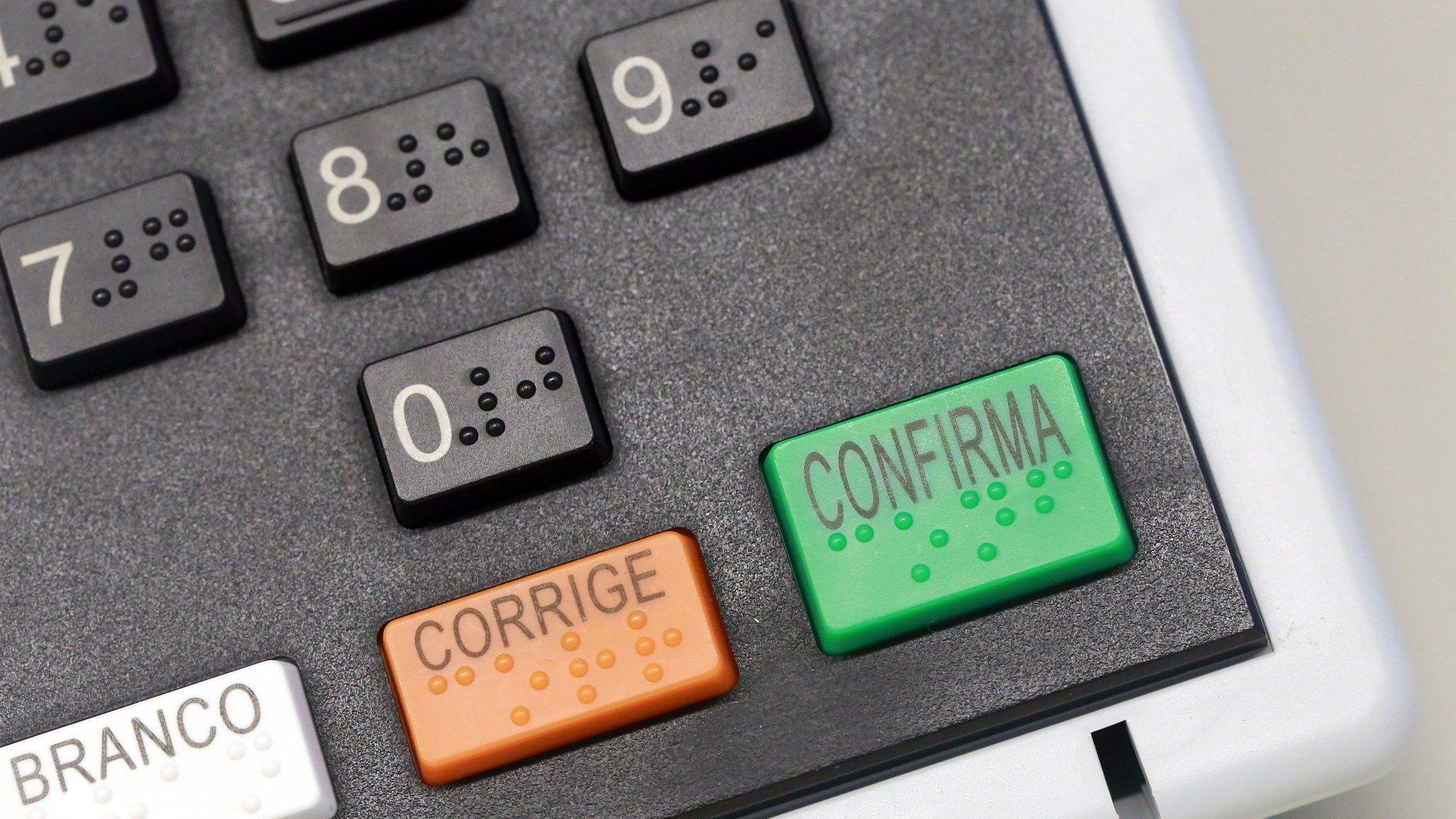
Designed for people who couldn't read: the design of Brazil's voting machine
A phone keypad, voting by number, a confirmation screen and a beep meant for the poll worker. Brazil's electronic voting machine turned thirty in 2026, and it's one of the most interesting product design cases in the country, because it was designed around the people most likely to be left out.
7 min read
Synthetic users get the average right and lose the difference between people
A client wrote that he only used the app to check his balance, because it didn't feel safe enough to move money. That one sentence changed the priority of an entire project, and the app's store rating went from 3.2 to 4.7. A conversation about what synthetic users give you, what they have no way of giving you, and the test I use to decide where they belong.
9 min read
loading comments...